
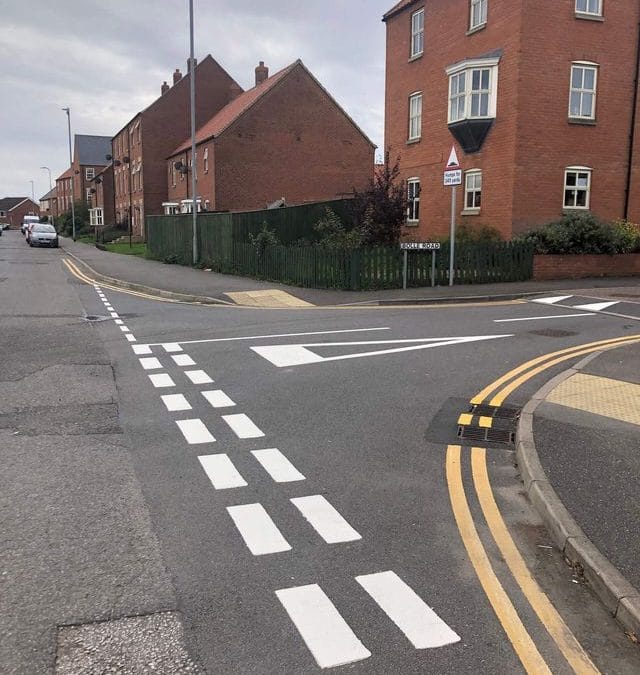
Road, car park and warehouse markings need attention when wear or changes to the site make the intended layout difficult to follow. Regular inspections help identify which lines need refreshing and whether the surface or layout requires other work first. The right maintenance plan depends on the location, traffic and marking system.
Faded Lines and Missing Sections
Look for broken bay outlines, worn arrows, missing lettering and crossing markings that are becoming difficult to distinguish. Pay particular attention to entrances, turning areas, pedestrian routes and junctions where markings provide useful information. HSE’s guidance on workplace signs and road markings advises renewing road markings when they fade.
Photograph the affected areas and record their location and approximate extent. A site-wide review can help group maintenance work into a planned visit, but markings that require prompt attention should not be left simply to build up a larger job.
Cracking, Peeling or Surface Damage
Flaking or damaged markings need an assessment of both the marking and the surface beneath it. Surface deterioration, contamination, preparation and the existing coating can all affect the next application. Applying another coat without addressing the underlying problem may not provide a durable result.
Material selection should follow the surface conditions, intended use and project specification. Thermoplastic, paint and resin systems are not interchangeable solutions for every site. Discuss preparation and any required removal before agreeing the repair method.
Changes to Parking or Traffic Routes
New parking bays, altered delivery arrangements and reorganised warehouse areas can leave existing markings pointing people in the wrong direction. Review the layout against the latest drawings and identify redundant lines before applying replacements.
Agree how conflicting markings will be treated. Our line marking removal service provides information on removal options. The appropriate method depends on the surface, existing material and required finish; removal can leave visible differences in the surface.
Visibility in the Conditions the Site Uses
Inspect markings in the lighting and operating conditions relevant to the site. Rain, glare, dirt and snow can reduce visibility. Fresh markings do not guarantee clear visibility in every weather condition, and anti-slip coatings are not a general remedy for poor visibility.
If a marking is difficult to identify, consider its condition alongside lighting, signs and the wider layout. Any material or reflectivity requirements should be agreed against the project specification rather than assumed from the appearance of the existing lines.
How Often Should Markings Be Reviewed?
There is no single repainting interval suitable for every site. Traffic levels, turning movements, surface condition, weather exposure and the selected marking system all influence wear. Include markings in routine site inspections, and review them after resurfacing, layout changes or reports that routes are unclear.
For work on an occupied site, agree access, closures and reopening requirements before booking. Our guide to scheduling line marking with less disruption explains practical preparation and programme considerations.
Arrange Line Marking Maintenance with Tomras
Tomras Road Markings Ltd provides road marking maintenance and reinstatement, car park remarking and warehouse and factory floor marking. We also cover Sheffield and South Yorkshire alongside other service areas.
Send your site location, photographs or drawings, the areas requiring attention and preferred dates. Contact Tomras for a quotation so we can review the scope, preparation and access arrangements.