
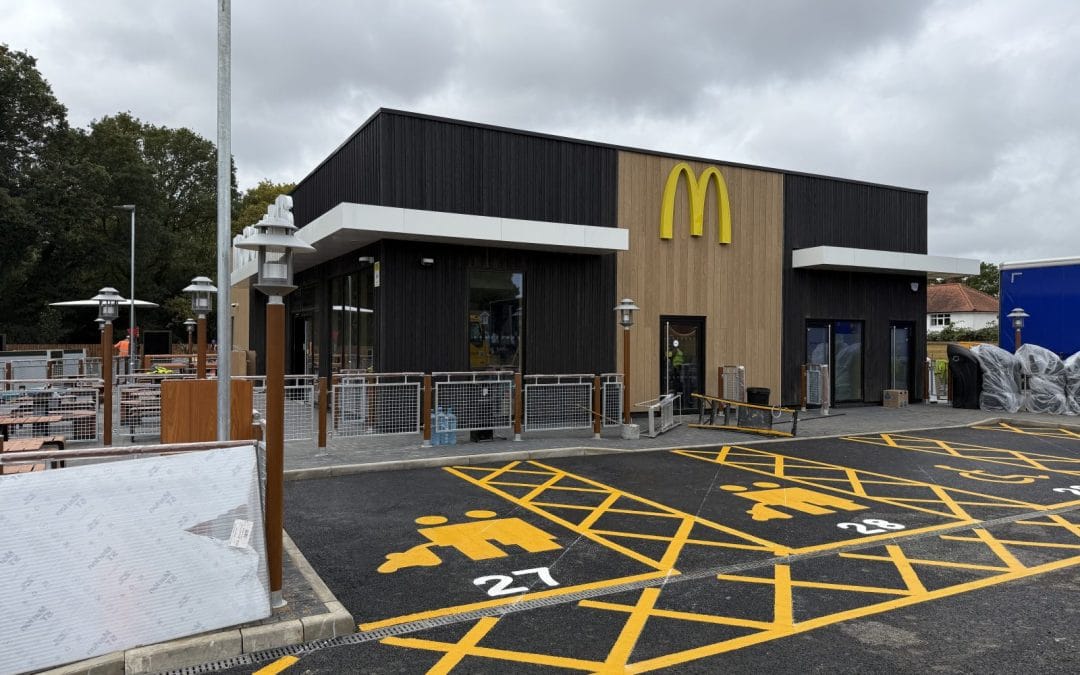
Clear road markings help drivers understand where to travel, where to give way and which areas should remain clear. On private roads, campus entrances and commercial sites, a consistent layout can make vehicle routes easier to follow and help pedestrians identify crossing points.
How Road Markings Support Traffic Flow
Centre lines, edge lines, arrows and junction markings communicate different parts of a road layout. The Department for Transport’s road markings guidance illustrates common markings and their meanings. The markings used on a project should follow the approved drawings and relevant specification.
Make Junctions and Vehicle Routes Easier to Follow
Directional arrows and lane markings help drivers identify the intended route through a site. Give-way and stop markings show where drivers need to respond to a junction. These features work best as part of a coordinated layout, alongside suitable signs, sight lines and traffic-management arrangements.
Identify Crossings and Keep-Clear Areas
Crossings, pedestrian routes and hatched areas help people recognise how a site is intended to operate. For example, a commercial entrance may need clear vehicle directions, an identifiable crossing point and markings that distinguish parking spaces from access routes. Markings support the layout; they do not replace a site traffic-management plan.
When Existing Markings Need Attention
Check for worn lines, missing sections, poorly defined arrows and markings that no longer match the site layout. Review busy entrances, junctions, crossings and areas affected by frequent turning. Resurfacing or changes to parking and delivery arrangements may also require markings to be reinstated or redesigned.
Visibility depends on the marking system, its condition, lighting and weather. Markings can become harder to see in rain, glare or snow, so a fresh application should not be treated as a guarantee of visibility in every condition.
Plan the Layout Before Applying New Lines
Before booking work, gather the latest drawing, site photographs and a list of the markings required. Confirm dimensions, colours, symbols and any project-specific material requirements. If the layout is changing, identify which old markings need to be removed so they do not conflict with the new routes.
The appropriate material and preparation depend on the surface, traffic and specification. Access arrangements and suitable application conditions also affect the programme. Discuss these details before agreeing when each area can return to use.
A Completed Road Marking Example in Nottingham
Our Clifton Campus road marking project shows crossings, arrows, junction markings and access-route markings on a busy university campus. The photographs provide a practical example of several marking types used across one site.
Discuss Road Marking Work with Tomras
Tomras Road Markings Ltd provides road marking services for new layouts, reinstatement after resurfacing and maintenance of existing markings. We also provide car park line marking and cover Sheffield and South Yorkshire alongside other service areas.
Send us your site location, latest drawings or photographs, marking requirements and preferred dates. Contact Tomras to discuss access arrangements and request a quotation.